

How to Play War for Westeros
Learn the core loop of Game of Thrones: War for Westeros — a PC RTS from PlaySide Studios in the tactical control-point lineage of Company of Heroes and Dawn of War, with squad combat, eight confirmed heroes, capture-and-razes victory, and the asymmetric House of Westeros.
A Tactical Control-Point RTS
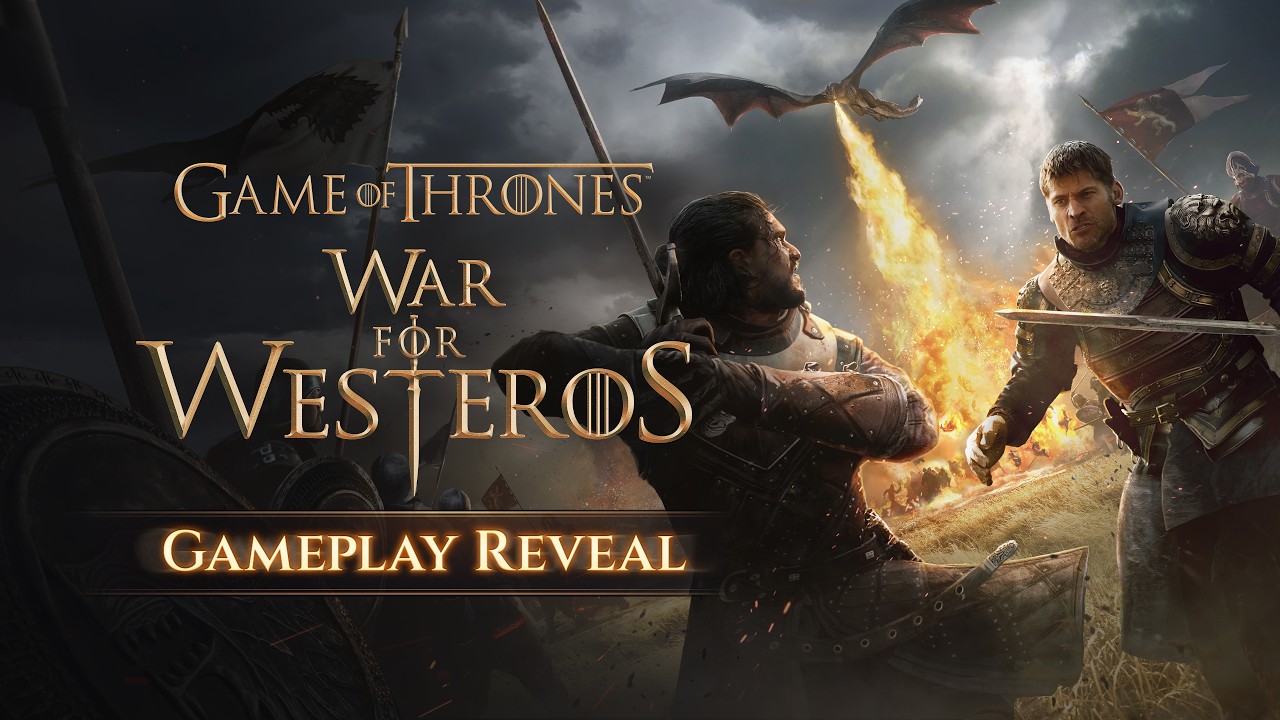
Game of Thrones: War for Westeros is a real-time strategy game developed by PlaySide Studios and now scheduled for PC release in early 2027 after the official July 2026 delay. Despite PlaySide using the marketing phrase "classic real-time strategy," the actual design sits in the tactical control-point lineage pioneered by Warhammer 40,000: Dawn of War (2004) and Company of Heroes (2006) — not in the resource-harvesting, base-construction model of StarCraft or Age of Empires.
You command squads, not individual soldiers. Victory comes from capturing outposts and razing enemy bases, not from out-producing your opponent by clicking faster. The Gamescom 2026 gameplay reveal confirmed that strategic objectives are geographic control points and that physical impact matters: cavalry break through exposed archer lines with great physical weight, giants slam their club into the earth and launch entire enemy squads into the air, dragons burn down enemy fortresses. This is a game where battlefield feel and counter-play trump macro optimization.
Each match pits four factions against each other — House Stark, House Lannister, House Targaryen, and the Night King — each built around asymmetric mechanics drawn from their HBO series identity. Stark relies on infantry fundamentals plus four named heroes (Robb Stark, Jon Snow, Ghost, Grey Wind); Lannister fields economic and siege superiority with Jaime and Tywin; Targaryen commands dragons and Daenerys; the Night King employs resurrection mechanics and giants. Mastery comes from reading the battlefield, identifying the enemy composition, and deploying the specific counter — light infantry spearmen against a cavalry charge, for example.
The Core Gameplay Loop
A typical engagement begins with deployment on a tactical map scaled for squad combat. You start with a handful of squads, a hero unit, and one or two control points. Capturing an outpost expands your production or reveals map territory; contesting an enemy outpost denies the same. The more territory you hold, the more reinforcements and battlefield options you unlock — but every squad you send into the fight risks being lost for the rest of the match if the enemy focuses fire correctly.
Unit categories span the classic RTS triangle. Infantry hold lines and absorb damage. Cavalry punish overextensions and raid vulnerable economy or production structures, but lose to anti-cavalry infantry such as spear walls. Siege dismantles fortifications but requires setup time and escort protection. Each faction adds a high-impact "trump card" — dragons for Targaryen, giants for the Night King — that can decide a fight when timed correctly but cannot replace composition discipline.
Heroes level up during a match, unlock new abilities, and passively buff the squads around them. Jon Snow is a front-line rally buffer; Tywin Lannister is a precise back-line coordinator with a wider aura that can be placed at will; the Night King amplifies the undead and triggers map-wide resurrection. Managing hero positioning and ability cooldowns separates competent players from great ones.
Combat initiation is squad-driven. You choose when to engage, when to retreat, and when to bypass a fortified position entirely. Declining unfavorable fights is valid strategy. The Night King's resurrection mechanic punishes players who let losses pile up, while Stark infantry and Lannister knights reward patient trading and coordinated focus fire. Cross-referencing our controls guide and units breakdown will help you translate these systems into muscle memory before release.
What Makes It Different From StarCraft or Total War
Players coming from StarCraft or Age of Empires will notice the absence of traditional resource nodes, worker units, and base-building ladders. War for Westeros does not use that model. There is no mining minerals, no farming gold, no building supply depots. Strategic objectives are capture points and enemy bases — not resource nodes. Success is determined by tactical composition and battlefield counter-play — knowing to deploy light infantry spearmen against a cavalry charge rather than simply producing more of whatever unit you have.
Compared to Total War, War for Westeros is faster and more focused. There is no dual-layer overworld campaign with turn-based management on top of real-time battles. The game is real-time, squad-level, and built for matches that resolve in twenty to forty-five minutes rather than multi-hour campaigns. Campaign and multiplayer structure are layered on top of the same tactical engine, but the moment-to-moment play stays in squad combat.
Compared to MOBA-style hero shooters, War for Westeros keeps the army fantasy: you still command dozens of entities at once, and a single misclick on a control group can lose a flank. Heroes are force multipliers, not one-man armies. Cross-reference our heroes page and combat systems article for detailed breakdown of how the eight confirmed heroes interact with squad composition.
Eight Heroes, Four Factions, Countless Matchups
The Gamescom 2026 gameplay reveal confirmed eight named heroes across the four factions: Robb Stark, Jon Snow, Ghost, and Grey Wind for House Stark; Jaime Lannister and Tywin Lannister for House Lannister; Daenerys Targaryen for House Targaryen; and the Night King for the undead. Each hero brings unique abilities that can shift the tide of battle — Jon Snow provides a front-line morale buff, Tywin offers precision tactical buffs with wider area coverage, Daenerys enables dragon breath, and the Night King enables resurrection pulses.
Asymmetry is real. Stark has four heroes, Lannister two, Targaryen effectively one plus her dragons, and the Night King one plus an army of the dead. That distribution reflects how each house operates in the source material: the North is famously hero-rich with direwolves, while the Lannisters concentrate power through Tywin and Jaime, and Targaryen command funnels through one queen and her three dragons.
Matchup knowledge is essential. Stark vs Lannister tests disciplined infantry against knight timings. Stark vs Targaryen becomes an anti-air investment race. Stark vs Night King becomes a priority puzzle on giants. Lannister vs Targaryen is knights versus dragons, decided by vision and cooldown tracking. Lannister vs Night King rewards burst knights over slow siege. Targaryen vs Night King is the iconic dragon breath versus wight swarm. Read our tier list preview for snapshot rankings and Jon Snow vs Night King guide for the marquee matchup.
Getting Started Before Launch
If you are new to RTS games entirely, start with the fundamentals in our RTS basics guide before diving into faction-specific strategies. War for Westeros assumes comfort with selection boxes, control groups, and minimap awareness, but it also teaches advanced concepts like squad composition and counter-play through the skirmish mode that ships at launch.
Choosing a faction shapes your first ten hours more than any single build order. House Stark teaches defensive patience and combined-arms fundamentals; House Lannister rewards economic discipline and siege timing; House Targaryen introduces aerial micro and cooldown management; the Night King flips the script with endless reinforcement and resurrection. Use the faction selector tool if you are unsure where to begin.
Wishlist the game on Steam to receive launch notifications and beta announcements from PlaySide. The beta registration is open at warforwesteros.com — see our beta access guide for the exact steps. As release approaches, this wiki will expand with confirmed patch notes, exact keybind tables, and post-launch balance updates. Until then, treat every detail here as a pre-beta compilation based on the Gamescom 2026 trailer, developer diaries, and official press materials — always cross-check against the latest announcements on the news page.
Frequently Asked Questions
Is War for Westeros a base-building RTS like StarCraft?
Do you control individual soldiers or squads?
How does the Night King faction differ from the human houses?
How many heroes are confirmed?
How long do matches typically last?
When does War for Westeros release?
Related Pages
Wishlist on Steam
Wishlist on Steam